When the temperature drops in South Africa, customer behaviour shifts in a direction that is predictable, consistent, and commercially exploitable. People gravitate toward warmth, comfort, and familiar sensory experiences. The businesses that understand this shift and equip themselves to meet it are the ones that grow their revenue during winter rather than simply maintaining it.
Comfort food is not a niche trend or a seasonal gimmick. It is a well-documented consumer behaviour pattern with direct implications for how South African food service businesses should stock, menu, and equip their operations between May and August.
The Psychology Behind Comfort Food Demand
Comfort food triggers a specific set of consumer responses that are distinct from standard hunger-driven purchasing. The warm, rich aromas of fresh bread, soup, or coffee activate emotional associations with safety, warmth, and positive memory. Customers are not just buying food, they are buying a feeling.
This matters commercially for two reasons:
1. Comfort purchases are less price-sensitive. A customer who associates your hot chocolate with the feeling of warmth on a cold morning will pay a premium for consistency. They are not comparison-shopping. They are seeking a reliable sensory experience.
2. Comfort purchases increase dwell time and basket size. Customers who feel comfortable and warm in your space stay longer and order more. A hot drink accompanies a meal. A warm pastry accompanies a hot drink. Each comfort element adds to the transaction without requiring aggressive upselling.
Understanding this psychology is the starting point. The equipment that enables you to deliver it consistently is what converts the psychology into revenue.
Hot Beverages: The Highest-Margin Winter Opportunity
There is no single winter revenue driver more accessible to South African food service businesses than high-quality hot beverages. Coffee, hot chocolate, chai, and tea served at the right temperature, with the right consistency, at speed, this is what customers seek instinctively on cold mornings and afternoons.
Commercial Coffee Machines
A professional commercial coffee machine that performs consistently across hundreds of drinks per shift is the anchor of any winter hot beverage programme. The variables that separate a good coffee experience from a poor one, extraction pressure, water temperature, milk steam consistency, are controlled by the machine, not the operator.
An underpowered or poorly calibrated machine during your peak winter service hours costs you customers. They will find the café around the corner that gets it right every time and return there habitually for the rest of winter.
When evaluating your coffee equipment for winter, assess:
- Recovery time between drinks, a machine that can't keep up with a queue loses you customers in real time
- Steam wand performance under sustained demand, milk quality drops when steam pressure is inconsistent
- Temperature stability across the shift, extraction quality changes when boiler temperature drifts
Hot Chocolate Machines
Commercial hot chocolate machines are one of the most underutilised winter revenue opportunities in South African food service. A well-executed hot chocolate, thick, rich, served at the correct temperature, is a premium product that commands a premium price. It appeals across age groups and represents a high-margin, low-complexity add to any beverage menu.
Commercially, a hot chocolate machine:
- Produces a consistent product without barista skill dependency
- Delivers at pace during peak service without slowing down coffee operations
- Creates a visible product category that encourages impulse ordering
Urns and Water Boilers
For high-volume tea and instant hot drink service, canteens, corporate catering, large-format events, commercial urns and water boilers provide the capacity to serve without constant monitoring or refilling. An urn that runs out mid-service at a corporate function is an operational failure that is completely avoidable.
Soup: The Most Profitable Winter Menu Item
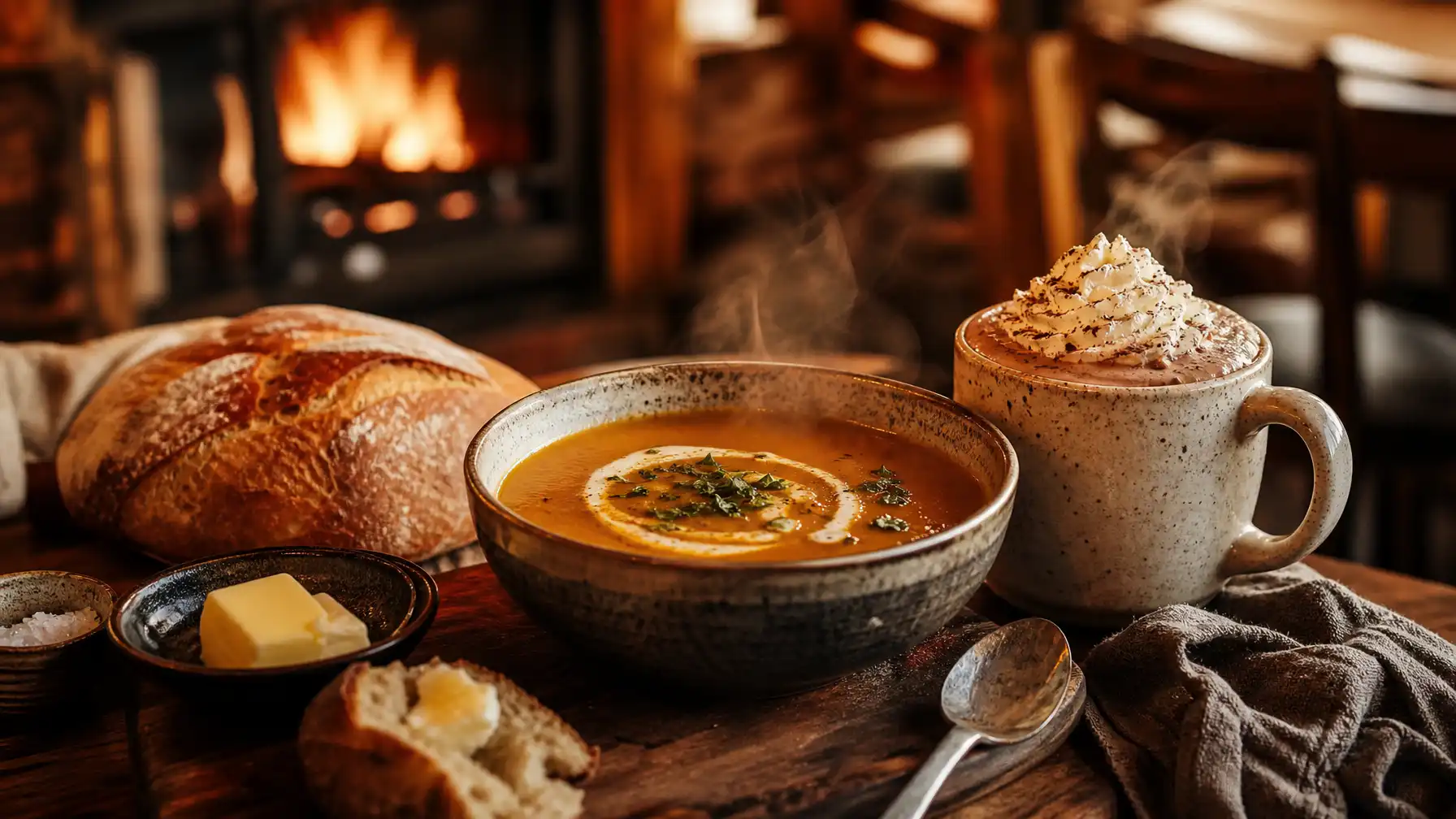
Soup is one of the most commercially efficient winter menu items available to South African food service businesses. The ratio of ingredient cost to selling price is among the best of any menu category, the production process is straightforward and scalable, and the demand is directly aligned with winter consumer psychology.
For businesses that have not run a structured soup programme, the equipment investment to start one is modest and the return is fast:
- Commercial stock pots on a commercial range produce large batches efficiently
- Commercial blenders handle smooth and purée soups with consistent results
- Soup kettles or heated urns hold and display soup at service temperature for takeaway, buffet, or counter service
- Insulated transport containers allow soup to be taken off-site for catering events without quality loss
Pairing soup with freshly baked or sourced bread turns a simple menu item into a premium combo that justifies a meaningful price point.
Waffle Makers and Warm Dessert Options
Waffles represent the same logic as hot chocolate, a simple, high-margin comfort item that requires minimal operational complexity but delivers strong impulse purchase behaviour during winter. A commercial waffle maker on a visible counter or service station creates aroma-driven impulse sales. The visual and sensory cues (the smell, the steam, the golden product) sell before any menu board does.
For bakeries, cafés, and food service operations looking to add a winter item with immediate retail impact and strong margin, a commercial waffle maker is one of the most cost-effective additions available.
The Environmental Component: Warmth as a Customer Retention Tool
Beyond the food and beverage programme, the physical environment of your space plays a direct role in winter revenue. Customers make a rapid, often subconscious decision about whether to stay or move on within moments of entering a space. A warm, inviting environment keeps them; a cold or uncomfortable one loses them.
Practical improvements that directly affect customer behaviour:
- Infrared patio heaters allow outdoor seating areas to remain usable through winter, maintaining the capacity that drives revenue
- Draft control at entrances prevents the uncomfortable temperature drop every time the door opens, a simple fix that meaningfully improves the perceived warmth of the space
- Heated display equipment keeps baked goods and savouries visually appealing and at serving temperature at the point of sale, driving impulse purchases at the counter
Building a Winter Revenue Programme
The most effective approach to winter revenue growth combines the menu, the environment, and the team:
| Element | What It Drives | Equipment Needed |
|---|---|---|
| Hot beverages | Basket size, dwell time, morning traffic | Commercial coffee machine, hot chocolate machine, urns |
| Comfort food menu | Transaction frequency, customer retention | Stock pots, commercial blender, soup kettle, waffle maker |
| Warm environment | Dwell time, return visits, outdoor capacity | Infrared heaters, heated display cabinet |
| Team briefing | Upsell conversion | No equipment, operational practice |
The businesses that address all four elements before May consistently outperform those that address one or two. Winter revenue is not just about having the right menu. It is about creating the complete experience that makes customers choose your space over a competitor's on a cold day.
Preparing Before the Season
The commercial impact of winter preparation is highest when it is done before the cold season begins. Equipment sourced and installed in March or April is tested, staff are trained, and the offering is ready when demand shifts in May. Equipment sourced reactively in June or July arrives after the opportunity window has already partially closed.
At The Cater-Ring, we supply the equipment that enables South African food service businesses to convert winter consumer behaviour into consistent revenue, from commercial coffee machines and hot chocolate equipment to heating solutions and holding equipment for winter menus.
Contact the team at +27 10 109 2104 before the season arrives to discuss your specific winter revenue objectives.
Frequently Asked Questions
What is the most profitable comfort food addition for a South African café in winter?
Hot chocolate combined with a soup programme consistently delivers the best combination of margin and demand alignment for South African cafés in winter. Both are low-complexity to produce, high-margin to sell, and directly aligned with what customers seek during cold weather.
Do I need a dedicated machine for hot chocolate or can I use my coffee machine?
A dedicated commercial hot chocolate machine produces a superior product more efficiently than adapting a coffee machine. It allows simultaneous hot beverage service without slowing coffee production during peak periods, and it produces the thick, rich consistency that a quality hot chocolate requires.
How do I keep food warm for a catering event in winter without compromising quality?
Use chafing equipment and bain maries for wet dishes and insulated GN containers for dry items. Foods held in bain maries maintain serving temperature without continuing to cook, which is critical for quality at events where service spans an hour or more.
What warm menu items have the best margins for South African food service businesses?
In order of typical margin: soup (especially with bread pairing), hot chocolate, waffles, and freshly baked savouries. All benefit from winter demand alignment and have relatively low ingredient cost relative to selling price.