A clean commercial kitchen is a functional commercial kitchen. Hygiene standards in South African food service operations are not a preference or a best-practice recommendation, they are a legal requirement enforced by health inspectors, and they are directly tied to the safety of every customer who eats your food.
Beyond compliance, a well-maintained kitchen runs more efficiently, has fewer equipment failures, retains staff more effectively, and delivers more consistent product quality. The investment in structured cleaning and housekeeping practice pays back in every service.
This guide covers the practical cleaning and housekeeping standards every South African commercial kitchen should implement, the equipment that supports these standards, and the areas most commonly cited in health inspection findings.
Why Cleaning Standards in Commercial Kitchens Are Non-Negotiable
South African health authorities conduct routine and unannounced inspections of commercial food service premises under the Foodstuffs, Cosmetics and Disinfectants Act and local municipal health by-laws. Inspections assess:
- Surface cleanliness and sanitisation
- Food storage temperatures and labelling
- Pest control records and evidence
- Personal hygiene practices of staff
- Equipment condition and cleanliness
- Waste management systems
- Drainage and ventilation condition
A failed health inspection can result in temporary closure, required remediation before reopening, and public record, all of which carry significant commercial consequences. Structured, documented cleaning processes are the most reliable protection against unexpected failures.
Building a Daily, Weekly, and Monthly Cleaning Schedule
The most effective commercial kitchen cleaning programmes are structured into three tiers:
Daily Cleaning Tasks
These tasks must be completed every operating day, either between services or at close:
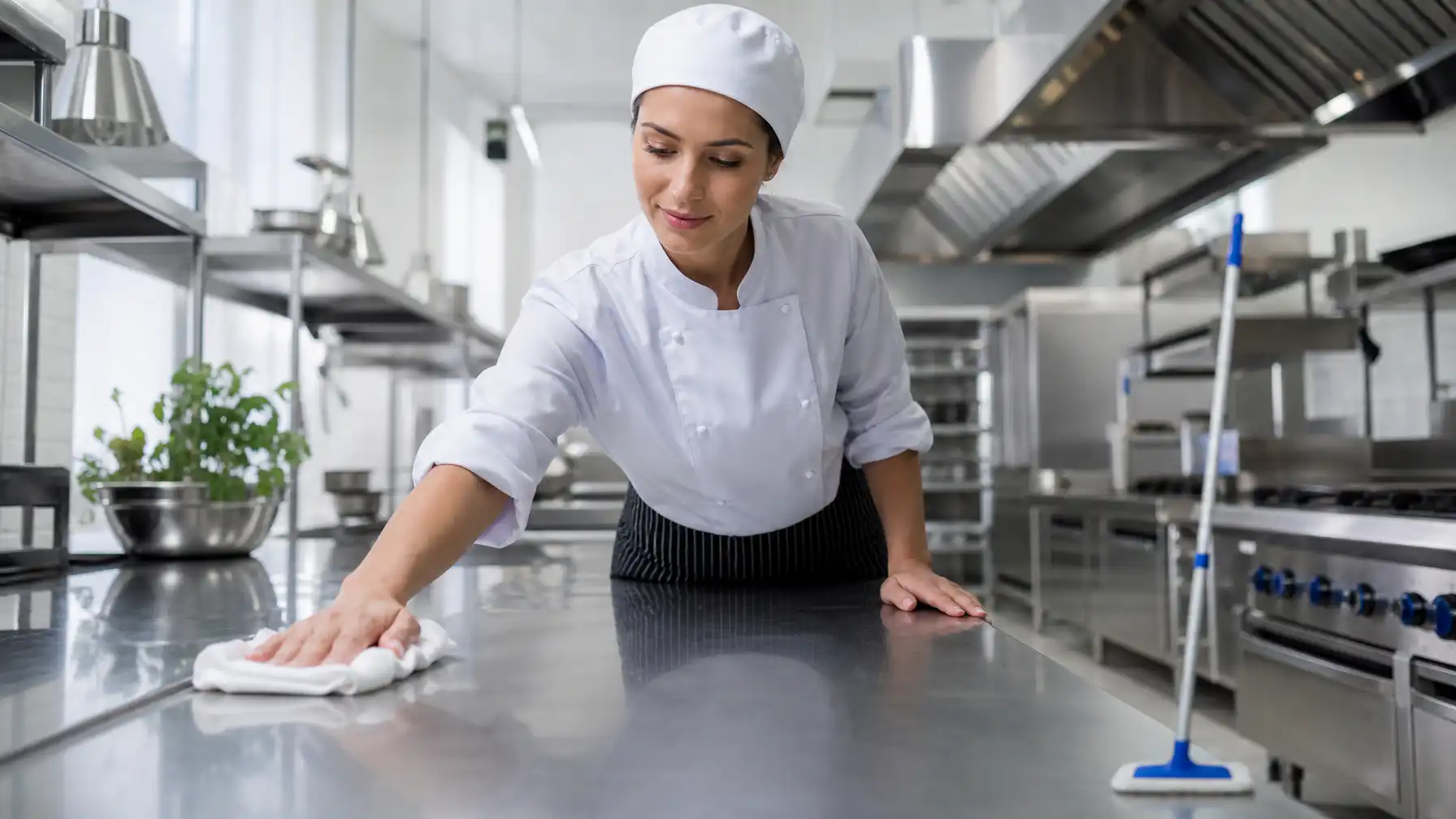
- All food contact surfaces (prep tables, cutting boards, sinks) sanitised with food-safe commercial sanitiser after use and at end of service
- Cooking equipment (ranges, fryer interiors, grill surfaces, salamander) cleaned of grease and food residue after each service
- Floors swept and mopped with commercial cleaner, with particular attention to areas under cooking equipment
- Bins and waste containers emptied and cleaned
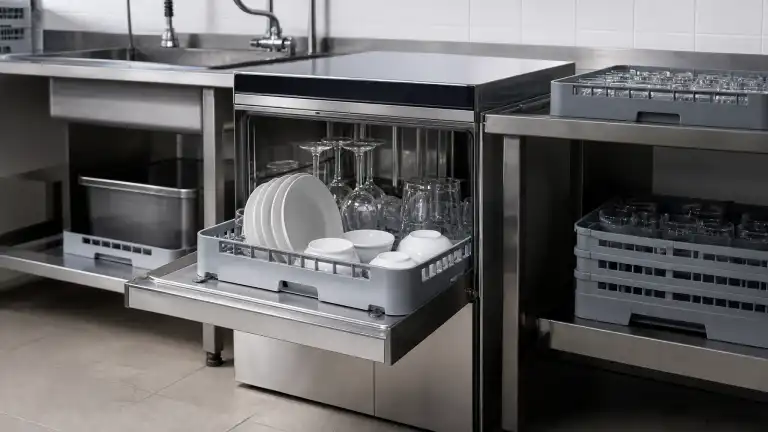
- Dishwasher interior cleared of food debris, rinse arms checked for blockage
- Hand-washing stations stocked with soap and sanitiser and verified clean
Weekly Cleaning Tasks
- Refrigerator and freezer interiors cleared and wiped down with food-safe sanitiser
- Oven interior deep clean, remove racks, trays, and liners; degrease and clean all surfaces
- Extraction canopy and filters degreased, grease build-up in extraction filters is a fire risk and reduces extraction efficiency
- Shelving and dry store cleared, wiped down, and restocked in FIFO order
- Floor drains cleared and flushed with drain cleaner
- Behind and under all equipment swept and mopped
Monthly Cleaning Tasks
- Refrigerator and freezer condenser coils cleaned with a coil brush, blocked coils reduce efficiency and cause compressor overwork
- Dishwasher descaling, scale build-up on heating elements reduces wash effectiveness and shortens equipment life
- Deep degrease of extraction ductwork, should be contracted to a professional duct cleaning service
- Pest inspection, professional pest control service visit and treatment where required
- Full equipment inspection, check for any wear, seal degradation, or performance issues that need addressing
Surface Cleaning and Sanitisation
There is an important distinction between cleaning (removing visible dirt and food residue) and sanitising (killing bacteria to safe levels). Both steps are required on food contact surfaces, cleaning first, sanitising second. Sanitising a dirty surface is not effective.
For stainless steel prep surfaces:
- Remove all food debris with a scraper or cloth
- Wash with warm water and commercial kitchen detergent
- Rinse with clean water
- Apply food-safe sanitiser solution at the correct dilution rate
- Allow contact time as per the sanitiser manufacturer's instruction (typically 30-60 seconds)
- Air dry or dry with a clean, designated cloth
Do not use abrasive scrubbing pads on stainless steel, they scratch the surface and create microscopic channels where bacteria can persist.
Equipment-Specific Cleaning Practices
Commercial Fryers
Fryer cleaning directly impacts food quality and safety. Oil that is not properly maintained absorbs bacteria, develops off-flavours that transfer to food, and breaks down faster, increasing operating cost.
- Daily: Remove food debris from oil using a fryer skimmer; check oil colour and quality; wipe down exterior
- Weekly or when oil is changed: Drain oil, boil out with commercial fryer cleaner, rinse thoroughly before refilling
Commercial Ovens
Oven cleanliness affects both food safety (residual grease can contaminate baked products) and performance (burnt residue absorbs heat and affects temperature consistency).
- Daily: Remove loose debris; wipe interior with a damp cloth while warm (not hot)
- Weekly: Full degrease of all interior surfaces, racks, and door glass
Refrigeration Equipment
- Daily: Check door seals for food residue build-up; wipe exterior surfaces
- Weekly: Internal wipe-down with food-safe sanitiser; check for odours that indicate spoiling product
- Monthly: Condenser coil cleaning to maintain efficiency and compressor life
Commercial Dishwashers
A commercial dishwasher that is not cleaned effectively fails at its primary function, it cannot wash your crockery properly if its own interior is contaminated.
- Daily: Clean spray arms, check for blocked nozzles, clear the sump filter, wipe door seals
- Weekly: Run a full clean cycle with commercial dishwasher cleaner
- Monthly: Descale with appropriate descaling agent
Personal Hygiene Standards
The most advanced cleaning schedule is undermined if the staff operating the kitchen do not maintain personal hygiene. Key requirements for South African commercial kitchens:
- Hand washing at a dedicated hand-wash sink (not the preparation sink) before beginning work, after handling raw food, after using the toilet, after touching the face or hair, and after any activity that could contaminate hands
- Clean, appropriate chef uniforms worn for each shift, dirty uniforms worn between shifts contaminate clean surfaces on contact
- Hair fully covered by a hat or net during food preparation
- Gloves changed between handling different food types and when torn or contaminated
- No jewellery on hands or wrists during food preparation
Storage Organisation and FIFO
Properly organised storage areas prevent contamination, reduce waste, and support cleaning efficiency. The FIFO (First In, First Out) principle ensures older stock is used before newer deliveries, preventing product expiry and waste.
Practical storage organisation for South African commercial kitchens:
- Stainless steel shelving for all food storage areas, stainless is easy to clean and does not harbour bacteria in surface damage the way painted or MDF shelving does
- Clear labelling with date-of-preparation or use-by information on all stored items
- Raw meats stored below cooked and ready-to-eat foods at all times
- Strong-smelling items (fish, certain cheeses) stored separately from other products
Waste Management
South African commercial kitchens must have adequate, covered waste containers at each station, and a waste management system that prevents overflow and minimises cross-contamination from waste.
Best practices:
- Covered bins at all preparation stations, emptied regularly during service
- Separate bins for food waste, recyclables, and general waste where municipal systems support this
- Waste storage area cleaned and sanitised daily
- Pest-proof waste containers and storage areas
Ventilation and Drainage Maintenance
Two often-neglected areas that have a direct impact on kitchen hygiene:
Ventilation: Extraction canopies and ducting that are not regularly cleaned accumulate grease, a fire risk and a source of contamination if grease drips onto food or surfaces below. Professional duct cleaning is required at regular intervals; filter cleaning should be part of the weekly schedule.
Drainage: Floor drains that are not cleaned regularly develop build-up of organic material that produces odours and supports bacterial growth. Drains should be cleared and flushed daily, and a professional drain treatment applied weekly.
Cleaning Equipment Every South African Commercial Kitchen Needs
A professional kitchen needs professional-grade cleaning tools:
- Commercial mops and buckets, separate mops for floors and different zones to prevent cross-contamination
- Colour-coded cleaning cloths, different colours for different zones (e.g., red for raw meat area, blue for general surfaces) prevent contamination transfer
- Commercial-grade surface sanitiser appropriate for food contact areas
- Commercial degreaser for cooking equipment and extraction filters
- Commercial floor cleaner with appropriate slip-prevention for wet kitchen floors
- Separate hand-wash soap and sanitiser at every hand-washing station
Frequently Asked Questions
How often should a commercial kitchen in South Africa be deep cleaned?
South African health regulations do not specify a universal deep-clean frequency, but best practice is a full deep clean, including under and behind all equipment, inside all refrigeration, extraction ductwork, and drains, at a minimum of monthly. High-volume operations, particularly those running two or more services daily, should deep clean more frequently.
What does a South African health inspector look for during a commercial kitchen inspection?
Health inspectors assess food storage temperatures and labelling, surface cleanliness and sanitisation, personal hygiene practices, pest control records, equipment condition, drainage and ventilation, and waste management systems. The most common citations relate to temperature control failures, inadequate hand-washing facilities, and evidence of pest activity.
How can I prevent pests in my commercial kitchen?
Pest prevention relies on four practices: eliminating entry points (sealing gaps around pipes, doors, and walls), eliminating food and water sources (covered bins, clean drains, no spilled food), regular professional pest control service (at least monthly), and maintaining a clean and organised storage area. Evidence of pests during a health inspection is a major citation that can result in immediate closure.
What cleaning products are safe to use on stainless steel kitchen surfaces?
Use food-safe, pH-neutral commercial kitchen sanitisers and detergents on stainless steel. Avoid bleach-based cleaners (which can cause surface pitting), abrasive powders or scrubbing pads (which scratch the surface), and strong acid or alkaline products not formulated for stainless steel. Always wipe in the direction of the metal grain to avoid surface marking.