Choosing a commercial catering equipment supplier is one of the most consequential operational decisions a South African food service business makes. The equipment itself matters. But in a market where lead times, import dependencies, and supply chain complexity are real variables, the supplier relationship determines whether your kitchen gets what it needs, when it needs it, at the quality promised.
This is not always obvious when everything is running smoothly. It becomes very obvious when something goes wrong.
The Real Test of a Supplier Happens Under Pressure
Most suppliers perform adequately when conditions are favourable. Stock is available, logistics are straightforward, timelines are met. The quality of a supplier relationship is tested when the unexpected happens, and in commercial supply chains, the unexpected happens.
At The Cater-Ring, this reality played out in a recent cross-border export order to Zimbabwe. The timeline was tight, logistics were aligned, and documentation was prepared. Then, a supplier failure: promised stock became unavailable, communication from the upstream supplier broke down, and the deadline was at risk.
The response was immediate and direct. The client's timeline and budget would be protected. The Cater-Ring activated its supplier network, secured alternative stock from a different source, coordinated urgent logistics to recover the lost time, and absorbed all additional costs internally. The export departed. The client received their equipment. The project was completed.
This is what a genuine supply partnership looks like, not the absence of problems, but decisive ownership when they arise.
What Separates a Supplier from a Supply Partner
There is a meaningful distinction between a company that sells you equipment and one that takes genuine responsibility for your operational outcomes.
A supplier takes your order, processes payment, and arranges delivery. A supply partner understands your operation, anticipates what could go wrong, and maintains accountability when it does.
For South African food service businesses, restaurants, hotels, catering companies, butcheries, and culinary institutions, the difference is commercially significant:
- Your kitchen's operational continuity depends on equipment arriving as specified, on time
- A delayed or incorrect delivery during a fit-out can postpone your opening date and cost you significant revenue
- Equipment failure with no responsive supplier support becomes a crisis, not an inconvenience
- A cross-border order with no contingency plan is one supplier failure away from a failed project
The Seven Things to Evaluate When Choosing a Supplier
1. Local Knowledge and Operational Experience
A supplier with genuine commercial kitchen experience understands what your operation requires beyond the item description. They know which specifications suit which environments, which equipment categories are frequently misspecified, and where the common mistakes are made.
In the South African context specifically, local knowledge includes: understanding of local voltage and gas supply configurations, awareness of import lead times and stock availability patterns, familiarity with HACCP and local health compliance requirements, and experience with South African climate conditions that affect refrigeration and ventilation choices.
2. Contingency Planning and Network Depth
Ask any potential supplier: what happens if your primary stock source fails on my order? A supplier without a clear answer to this question has no Plan B. A supplier with deep industry relationships and multiple sourcing options can recover from supply disruptions without passing the problem to you.
3. Communication During Complexity
Complex orders, large fit-outs, cross-border deliveries, multi-category purchases, require clear, proactive communication throughout the process. A supplier who communicates well when things are straightforward but goes quiet when problems arise is a liability during exactly the moments that matter most.
4. Accountability Orientation
Does the supplier take ownership of outcomes, or do they point to external factors when things go wrong? The answer to this question shapes the entire relationship. Accountability-oriented suppliers solve problems. Externally-focused ones explain why the problem isn't theirs to solve.
5. Scope of Range and Category Expertise
A supplier who stocks across all the categories your kitchen requires allows you to consolidate procurement, build a relationship with a team that understands your full setup, and resolve issues through a single point of contact.
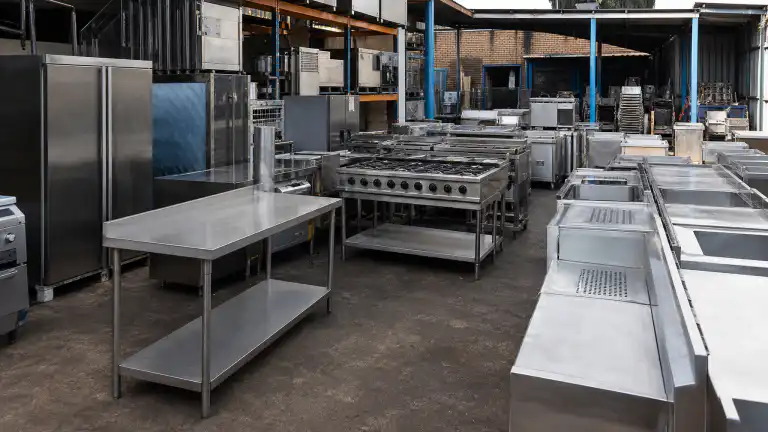
The Cater-Ring's range spans cooking equipment, refrigeration, stainless steel furniture, butchery equipment, bakery equipment, food preparation, holding and distribution, and Chef Link uniforms and knives, all from a single supplier relationship.
6. Consulting and Layout Capability
If you are planning a new kitchen or a significant upgrade, a supplier who can contribute to layout planning and equipment specification prevents the costly misspecifications that only become apparent after installation. Consulting services at this stage pay for themselves many times over in avoided rework and optimised workflow.
7. After-Sales Support and Service Network
Commercial kitchen equipment operates under sustained heavy use. Knowing that your supplier has a responsive support process and access to parts and service when equipment requires attention is a long-term operational assurance.
Red Flags to Watch For
These signals indicate a supplier relationship that will not hold up under pressure:
- Vague answers about lead times, stock availability should be confirmed, not estimated
- No clear process for handling order problems, professional suppliers have documented escalation processes
- Limited or single-source supply networks, no contingency if the primary source fails
- Pressure to decide quickly without adequate specification detail, rushing past specification leads to wrong equipment
- No local support presence, international-only suppliers have no practical capability to resolve South African operational issues quickly
How The Cater-Ring Approaches Supply Partnership
The Cater-Ring operates on a straightforward principle: the client does not carry the burden of supply chain failures. When problems arise, as they do in any complex supply environment, the response is to solve them, absorb the additional operational cost where appropriate, and maintain the client's timeline and budget.
This approach is built on decades of experience in South African commercial catering supply and export logistics. It includes:
- Pre-established alternative sourcing relationships across product categories
- Active logistics management for complex or time-sensitive orders
- Direct, transparent communication when any aspect of an order is at risk
- A commitment to completing what was promised, regardless of upstream complications
For South African businesses planning new kitchen builds, major equipment upgrades, or specialised orders with tight timelines, this orientation makes a practical difference to outcomes.
Frequently Asked Questions
How do I evaluate a commercial kitchen equipment supplier before committing to a large order?
Ask for references from businesses with similar operations, request a clear written specification for every item before agreeing to any purchase, ask specifically what happens if an item is unavailable or delayed, and assess the responsiveness and clarity of communication during your initial enquiry process. A supplier who communicates well under no pressure usually communicates better under pressure.
Does The Cater-Ring handle cross-border equipment deliveries from South Africa?
Yes. The Cater-Ring has experience handling cross-border export orders including documentation, logistics coordination, and compliance requirements for deliveries into neighbouring countries. Contact the team at +27 10 109 2104 to discuss your specific requirements.
What geographic area does The Cater-Ring service in South Africa?
The Cater-Ring services commercial kitchen equipment customers across South Africa, including Johannesburg, Pretoria, Cape Town, Durban, and surrounding regions. For major equipment orders, national delivery is available.
Can The Cater-Ring provide a full commercial kitchen equipment package for a new restaurant or hotel?
Yes. The Cater-Ring supplies full commercial kitchen packages across all equipment categories, cooking equipment, refrigeration, stainless steel furniture, food preparation, holding and distribution, bakery, and butchery. Consulting services for layout and specification are also available. Contact the team at +27 10 109 2104 or visit caterring.co.za.