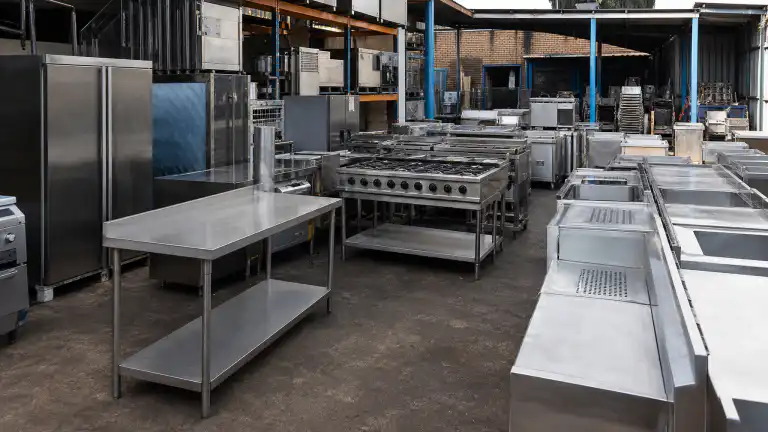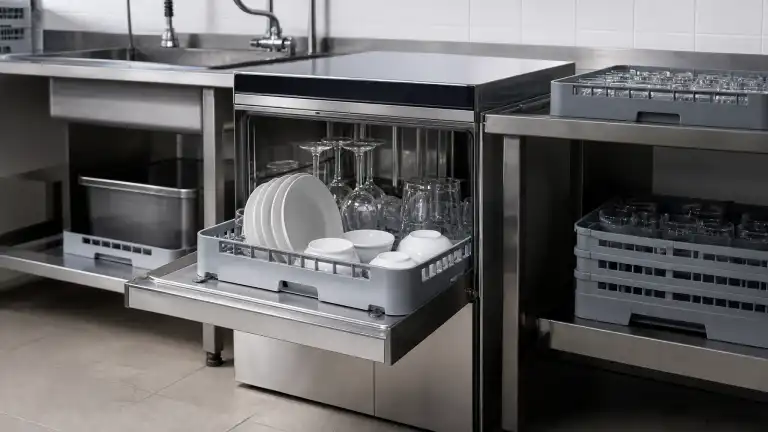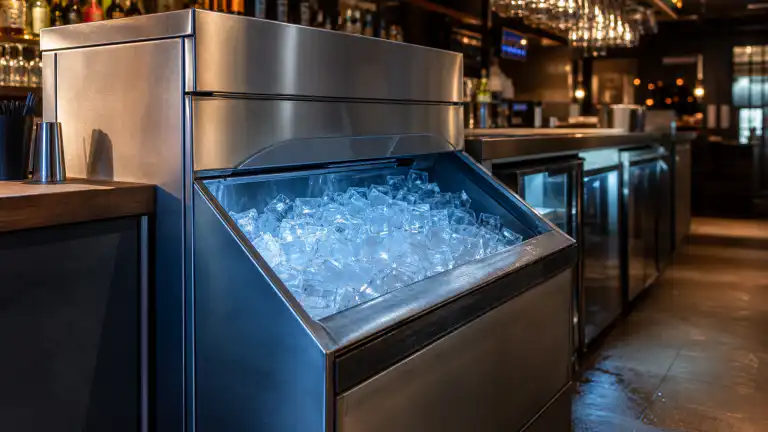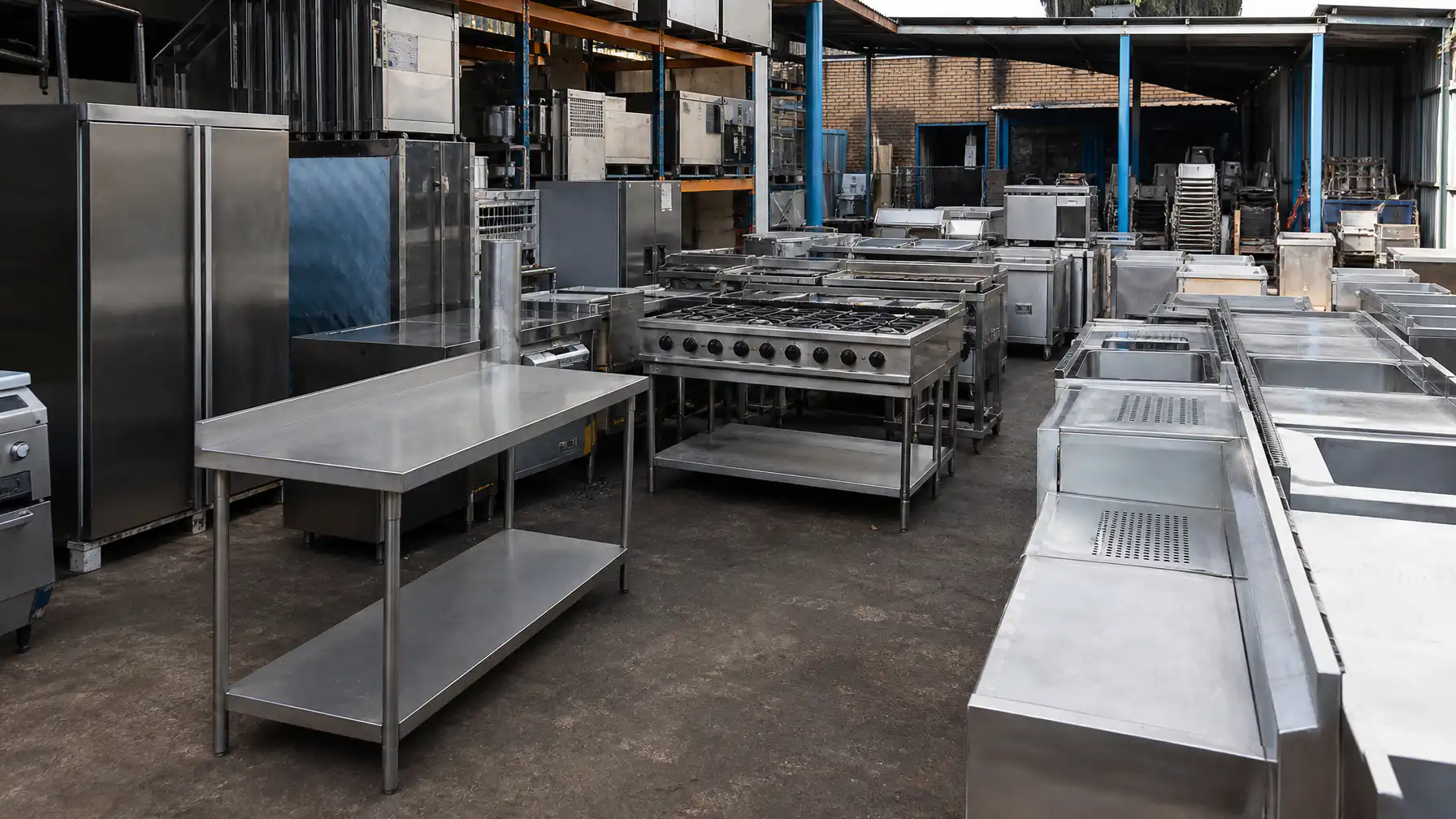
Starting or expanding a food service business in South Africa involves significant capital outlay, and the temptation to reduce that cost through second-hand equipment purchases is understandable. In some cases, it is the right decision. In others, it is a false economy that leads to higher total spend than buying new.
The difference between a good second-hand purchase and a poor one is not luck — it is knowing which equipment categories hold their reliability well in used condition, what to inspect before you commit, and how to assess whether the price reflects the true value.
This guide is written for South African food service operators considering second-hand purchases. It is balanced and honest: we sell new equipment at The Cater-Ring, but we also recognise that the used market has a legitimate role in the industry, and we would rather you make a good decision — whichever direction that takes you.
When Second-Hand Makes Sense
Not all catering equipment ages at the same rate or carries the same risk in used condition. Some categories are far safer second-hand purchases than others.
Categories That Hold Up Well
Stainless steel tables, benches, and shelving
Stainless steel fabrications have no moving parts, no refrigerant, no electrical components beyond simple lighting, and no mechanical wear. A well-made stainless steel prep table or wall shelf from a closed restaurant can deliver decades of additional service if it is structurally sound and the stainless has not been compromised. This is one of the strongest second-hand value propositions in the industry.
Inspect for: dents that affect structural integrity, delaminated welds at leg joints, corrosion (rust through or around welds indicates lower-grade steel or prolonged exposure to moisture), and damage to the undershelf or drawer mechanisms.
Our stainless steel tables range gives you a useful price benchmark when evaluating used units.
Shelving and racking
Wire shelving, chrome storage racks, and pallet racking are straightforward second-hand purchases. Check that uprights are straight, shelves are free of heavy rust, and connector clips are intact.
Some food preparation equipment
Larger, mechanically simple food preparation equipment — planetary mixers with all-metal gearboxes, stainless bowl lifts, vegetable slicers with replaceable blades — can be reasonable used purchases if the core mechanics are sound. The key is that replacement parts must be available in South Africa for the specific brand and model.
When Second-Hand Carries Significant Risk
Refrigeration Equipment
Refrigeration is the highest-risk category in the second-hand market. A commercial fridge, blast chiller, or display case involves a sealed refrigerant circuit, a compressor, condenser and evaporator coils, door seals, electrical controls, and temperature management systems — all of which degrade over time and can fail in ways that are not visible on inspection.
The specific risks are:
- Compressor condition cannot be accurately assessed without running the unit and monitoring amperage draw over time. A compressor that appears to run can be drawing excessive current, operating at reduced capacity, or close to end of life.
- Refrigerant leaks in the sealed circuit are expensive to diagnose and repair, require a certified refrigeration technician, and can render a unit uneconomical to fix.
- Evaporator and condenser coil condition may be compromised by scale buildup, physical damage, or corrosion that reduces thermal efficiency without being visible externally.
- Door seal replacement is often straightforward, but worn or warped door frames — common in older units — mean a replacement seal still does not achieve an adequate seal.
- Temperature stability may have drifted, posing a food safety risk even if the unit appears to cool adequately.
Our refrigeration equipment range illustrates the current pricing for new units, which is the correct comparison baseline when evaluating a used refrigeration purchase.
Cooking Equipment with High-Wear Components
Gas cooking equipment — ranges, deck ovens, fryers, and salamanders — involves burners, igniters, thermocouples, pressure regulators, and control valves. These components wear out and degrade. The risk profile in used cooking equipment is:
- Burner condition deteriorates with carbon buildup, corrosion, and physical damage. Incomplete combustion is a safety risk and a gas efficiency issue.
- Thermocouple and safety valve function may be compromised, creating a gas safety risk.
- Gas regulator calibration drifts over time and may not be certifiable without replacement.
- Internal oven chamber condition in deck and convection ovens includes door seals, element condition (electric), and chamber insulation integrity.
In South Africa, gas equipment must comply with SANS 1539 and installation must be performed by a qualified gas installer. A used gas appliance with no service history and no compliance certification creates regulatory liability.
Browse our cooking equipment range for new equipment comparisons.
What to Inspect Before Buying
Regardless of category, apply this inspection framework before committing to any used purchase:
Physical Condition Assessment
- Inspect all external surfaces for dents, cracks, and corrosion. Focus on corners, welds, and frame joints — these are structural stress points.
- For stainless steel equipment, look for rust at welds and scratches. Rust at welds indicates lower-grade stainless (often 430 grade instead of 304) or moisture damage. Surface staining on 304 stainless typically polishes out; rust through the surface does not.
- Check all doors, hinges, handles, and latches. Replacement hinges and handles are usually available, but factor the cost in.
- Inspect castors and feet for damage. A table or unit that does not sit level creates operational and hygiene problems.
Service History
Ask the seller directly: does this equipment have a service history? A legitimate food service business disposing of equipment at closure should be able to provide service records or at minimum identify the brand, model, and approximate installation year.
Equipment sold without any history, at unusually low prices, through informal channels is higher risk. It may have been removed from a failed business without proper decommissioning, may carry outstanding finance, or may have undisclosed faults.
Mechanical and Electrical Testing
Always test the unit powered on before purchasing. This applies to every piece of electrical or mechanical equipment without exception.
For refrigeration: power on and allow the unit to run for at least 15–20 minutes. Check that the temperature reaches and holds the rated setpoint. Listen for unusual compressor noise (rattling, grinding, or excessive vibration).
For cooking equipment: run all burners or elements and check for even heat distribution, correct ignition, and stable thermostat response.
For food preparation equipment (mixers, slicers, etc.): run through all speed settings or operating modes. Listen for bearing noise, check that all safety guards function correctly, and verify that all attachments fit correctly.
Compressor Assessment for Refrigeration
If you are seriously considering a used refrigeration unit, request an amperage reading from the compressor during operation. The rated running amperage appears on the compressor data plate. An amperage draw significantly above the rated figure indicates a struggling compressor with limited remaining life.
Parts Availability
Before purchasing any used equipment, confirm that replacement parts — motors, heating elements, door seals, blades, bearings — are available in South Africa for that brand and model. Equipment from brands with no local representation or discontinued product lines can become unserviceable the moment a component fails.
This is one of the advantages of purchasing from The Cater-Ring: the brands we stock have local support networks and available spares. When you need our food preparation equipment or bakery equipment, you can be confident that the machine you buy has parts support.
How to Assess Fair Value
The second-hand market in South Africa has no standardised pricing guide for catering equipment. Sellers price based on their own reference points, which vary widely. To assess whether a price is fair:
- Check the current new price for the same or equivalent unit from a reputable supplier.
- Apply a depreciation framework: well-maintained catering equipment typically depreciates 15–25% per year of active commercial use for the first three years, and more slowly thereafter for quality brands.
- Factor in the cost of any immediately required work: replacement parts, servicing, or compliance certification.
- Subtract the value of the remaining warranty — used equipment carries no manufacturer warranty and no supplier guarantee in most cases.
If the adjusted price is within 40–50% of the new price for equipment with more than two years of commercial use, it is worth scrutinising carefully.
The Warranty Gap and How to Manage It
New commercial catering equipment from a reputable supplier comes with a manufacturer's warranty — typically 12 to 24 months — and after-sales support. Second-hand equipment does not. This gap is a real financial risk.
To manage the warranty gap:
- Budget a contingency fund of 10–15% of the equipment purchase price for first-year repairs.
- Have the equipment inspected and serviced by a qualified technician before putting it into full production.
- Establish a relationship with a local equipment service company before problems arise.
Our consulting services team works with new and established food service operators across South Africa and can advise on equipment selection, inspection frameworks, and when new equipment is the better long-term investment for your specific situation.
When New Equipment Is the Better Investment
For any category where operational failure carries a high cost — refrigeration holding perishable stock, gas cooking equipment with compliance requirements, or food preparation equipment integral to a high-volume production line — new equipment with warranty and after-sales support is typically the better long-term investment.
The calculation changes when you are fitting out a lower-capital-intensity operation, replacing stainless fabrications, or supplementing existing capacity with simple equipment that is easy to inspect and low-risk in used condition.
Make the decision category by category, not as a blanket policy.
Frequently Asked Questions
Is second-hand refrigeration equipment worth buying in South Africa?
In most cases, the risks outweigh the savings unless you can have the unit independently inspected by a refrigeration technician before purchase, the service history is documented, and the price reflects the remaining useful life after accounting for potential compressor or component replacement costs. For critical refrigeration holding perishable stock, new equipment with warranty coverage is the safer investment.
What should I always test before buying used catering equipment?
Power on every electrical or mechanical unit and run it through its full operating range before purchasing. For refrigeration, allow 15–20 minutes of operation and verify that the setpoint temperature is reached. For cooking equipment, test all burners or elements. For food preparation equipment, test all speed settings and verify that all safety guards function. Never accept a seller's assurance that a unit works without testing it yourself.
How do I know if stainless steel is food-grade?
The most reliable method is to request documentation or check the unit's specification plate for the steel grade (304 is food-grade; 430 is lower grade and less corrosion-resistant). In the absence of documentation, look for surface rust at welds — this is a strong indicator of 430-grade stainless or quality issues in the manufacturing. Food-grade 304 stainless develops surface staining in hard water conditions, but it does not rust through the surface under normal commercial kitchen use.
What are the risks of buying catering equipment without an inspection?
Buying without an in-person inspection — particularly through online marketplaces — removes your ability to assess physical condition, test operation, and verify specifications. The risk is significant: a unit may be misrepresented, have undisclosed faults, or carry outstanding finance. For any purchase above a few thousand rand, an in-person inspection and operational test is not optional.